

Cross Connection Control
To ensure the safety of the drinking water provided to the community, Rapidan Service Authority is conducting a mandatory Cross-Connection Control Survey. This survey is required by the Virginia Department of Health (VDH) Waterworks Regulations (12VAC5-590-580).
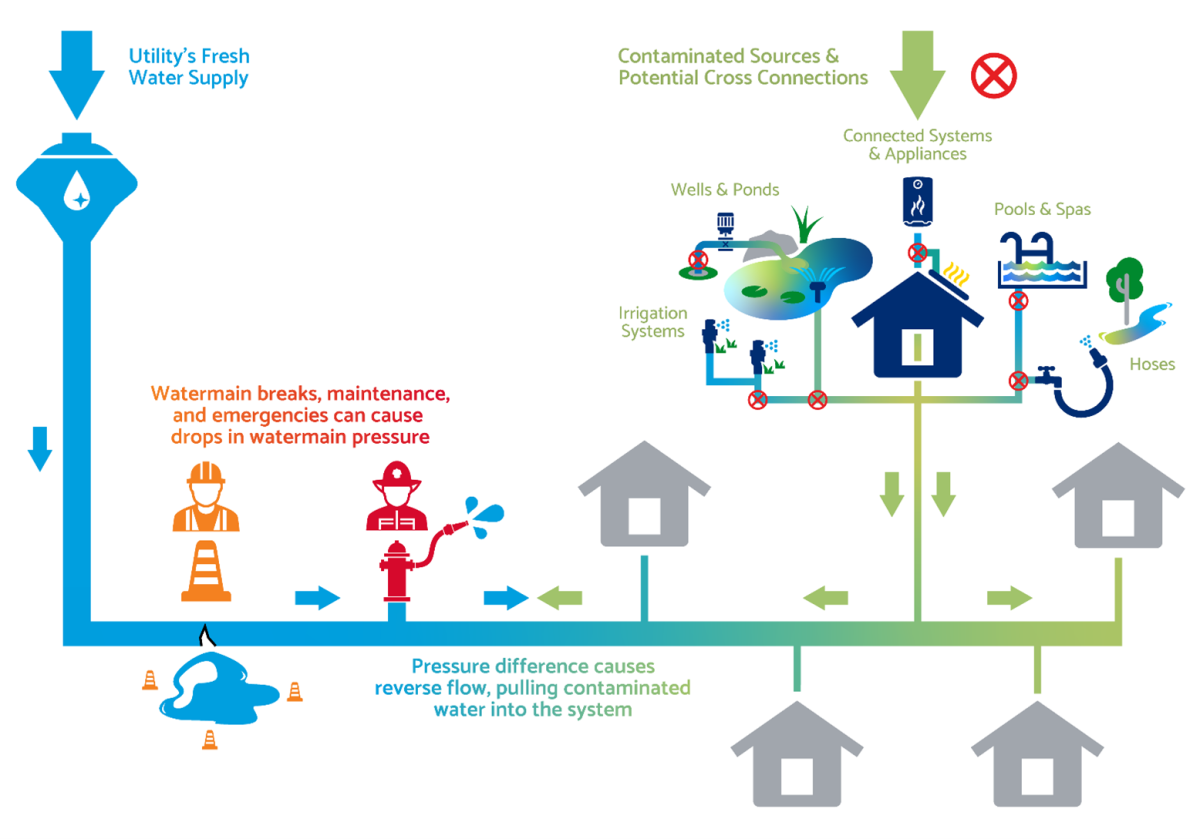
The Risk: A "cross-connection" is a point where your private plumbing meets the public water main. Without proper protection, hazardous substances—such as fertilizers from irrigation, chemicals from pools, or bacteria from livestock troughs—can be drawn backward (backflow) into the public drinking water system. This poses a severe health risk to you and your neighbors.
Your Legal Obligation: As a customer of RSA, you are required to disclose any potential hazards on your property. Failure to identify these hazards does not absolve you of liability; it increases it.
Required Action: Please complete the survey at https://form.jotform.com/Rapidan/cross-connection-survey to complete the form in under five minutes. This is the fastest way to ensure your account is marked as "Compliant."
Consequences of Non-Compliance: RSA is committed to providing clean, safe water. However, the safety of the entire system can be compromised by individual inaction. Pursuant to our service policies and State regulations:
- Unreturned surveys may trigger a mandatory physical inspection of your property’s plumbing at the owner’s expense.
- Properties found with unaddressed high-risk cross-connections are subject to immediate service termination until a certified backflow prevention device is installed and tested.
We appreciate your prompt cooperation in protecting our community’s water.
Frequently Asked Questions
When is a professional inspection or test required?
When a backflow prevention device is installed to protect against a high risk cross connection hazard, annual inspections must be performed by a Backflow Prevention Device Worker certified by the Virginia Department of Professional and Occupational Regulation (DPOR). This would include Reduced Pressure Zone (RPZ), Double Check Valve Assembly (DCVA), or Pressure Vacuum Breaker (PVB) devices.
Atmospheric Vacuum Breakers like you would thread onto a hose bib do not require professional testing or inspection.
Why are utility sinks on the list of hazards?
Often, utility sinks have threaded faucets where a hose can be attached. When a hose is connected and submerged in a liquid, there is a risk of a cross-connection via siphonage. if the pressure in the water system drops suddenly. In this case, an Atmospheric Vacuum Breaker would protect against this risk.
By default, utility sinks have an "air gap," meaning that the faucet outlet is above the top of the sink basin. If you have not extended the faucet, there is no risk.
What type of backflow prevention device is required for the hazards listed on the survey?
Visit https://fccchr.usc.edu/introduction.html for more information about backflow prevention and the various types of devices that can be used.
To see a list of the devices currently approved for use within RSA's water systems, visit https://fccchr.usc.edu/list.html.
If you have further questions, we would be glad to help. Please call (540) 972-2133.